
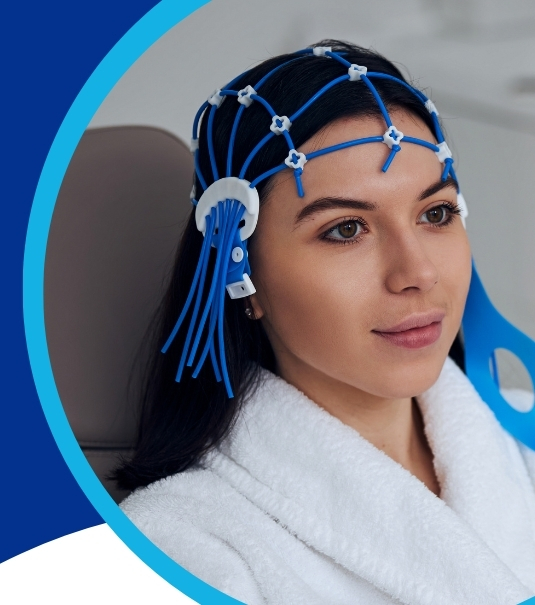
EEG & EMG - CF hospital
CF Hospital offers Electroencephalography (EEG) and Electromyography (EMG) services to carefully assess brain and nerve function. With modern technology and the guidance of experienced neurologists, we support the diagnosis of concerns such as seizures, neuropathy, muscle weakness, sleep difficulties, and other neurological conditions in patients of all ages.
From routine and sleep-deprived EEGs to EMG and nerve conduction studies, our tests are adapted to each person’s clinical needs. Every procedure is carried out with attention to patient comfort, reliable results, and timely reporting.
At CF Hospital, medical care is offered with compassion, shaped by Christian values of healing, service, and hope. We seek to serve every patient with grace, dignity, and the love of Christ.
Types OF EEG & EMG -CF Hospital
Routine EEG
Duration: 20–40 minutes Performed while the patient is awake and relaxed Useful for general brain activity assessment and detecting seizures
Sleep-Deprived EEG
Performed after the patient has had limited or no sleep Enhances detection of abnormalities that may not appear during routine EEG
Video EEG Monitoring
Combines EEG recording with video observation in a clinical setting Helps correlate physical symptoms (like convulsions) with electrical brain activity
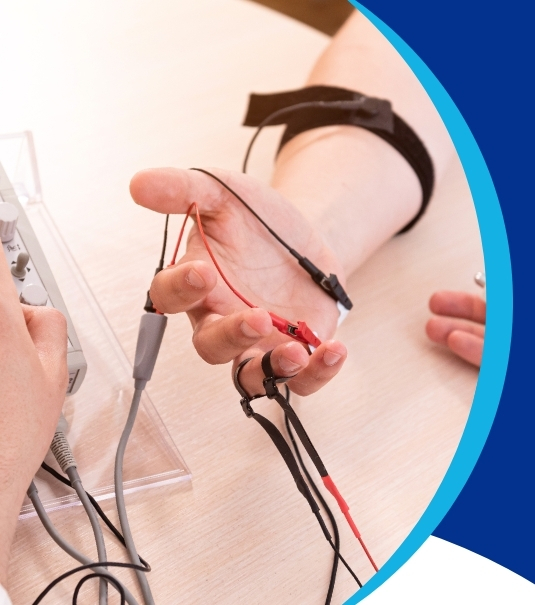
Routine Nerve Conduction Study (NCS)
Evaluates the speed and strength of electrical signals in peripheral nerves Commonly used to diagnose carpal tunnel syndrome, sciatica, and peripheral neuropathy
Needle Electromyography (Needle EMG)
A fine sterile needle is inserted into muscle tissue to record electrical activity Helps assess muscle disorders and nerve damage
Repetitive Nerve Stimulation (RNS)
A specialized type of Nerve Conduction Study (NCS) that evaluates the communication between nerves and muscles.
Precision care, always close when you need it.
We’ve 70 Years of experience in Medical Services.
Why Are EEG and EMG Tests Needed?
EEG is Diagnose epilepsy and different types of seizures and Investigate unexplained fainting, blackouts, or confusion
Evaluate sleep disorders like narcolepsy or insomnia and Monitor brain activity after a stroke, brain injury, or infection
EMG test checks to find the cause of muscle weakness, cramps, or twitching Detect nerve damage (like carpal tunnel syndrome or sciatica)
Diagnose neuromuscular disorders such as myasthenia gravis Evaluate conditions like peripheral neuropathy, radiculopathy, or motor neuron disease
Why Patients Trust CF Hospital
-
Our EEG & EMG tests are conducted and interpreted by highly trained neurologists and skilled technologists, ensuring accurate and reliable results.
-
We use state-of-the-art machines for EEG and EMG testing, capable of capturing even subtle abnormalities in brain and nerve activity.
-
From routine to sleep-deprived EEG, and NCS to RNS EMG, we offer a full range of neurodiagnostic services tailored to patient symptoms and medical conditions.
-
Tests are done in clean, quiet, air-conditioned rooms with a focus on privacy and comfort especially helpful for pediatric or anxious patients.
-
We deliver reports fast — without compromising on detail or accuracy — to help your doctor make timely treatment decisions.
Frequently Asked Questions
What is an EEG?
What is an EEG?
An EEG (Electroencephalogram) is a test that records electrical activity in the brain. It helps diagnose conditions like epilepsy, seizures, sleep disorders, and other brain-related issues.
What is an EMG?
What is an EMG?
An EMG (Electromyography) measures the electrical activity of muscles and the nerves controlling them. It is used to detect nerve damage, muscle weakness, and neuromuscular disorders.
Can EEG detect stress, anxiety, or mood disorders?
Can EEG detect stress, anxiety, or mood disorders?
While EEG primarily detects brainwave abnormalities linked to seizures or sleep disorders, certain patterns may reflect brain states affected by severe anxiety, depression, or trauma. However, EEG alone is not used to diagnose mood disorders.
Can EEG or EMG predict future seizures or nerve damage?
Can EEG or EMG predict future seizures or nerve damage?
These tests don’t predict future problems but can reveal signs that you’re at risk (e.g., epileptiform activity or nerve slowing). This helps doctors intervene early with the right treatment.